How to Read Your Experian Credit Report (Simple Guide)

The first time you open an Experian credit report, it can feel like a lot more than your CIBIL one, more tables, more indicators, more fields to scroll through. That extra density is exactly why so many people assume Experian reports are harder to read.
They're really not.
Underneath all those extra fields, an Experian report follows the same basic structure as CIBIL. It just goes one layer deeper, showing more behavioural and account-level detail that lenders find genuinely useful. Once you know what actually matters on the page, reading it becomes pretty simple, and honestly quite informative.
This guide walks through each section in plain language, the way a bank would actually read it, no jargon involved.
Haven't downloaded your report yet? Start here: How to Download Your Free Experian Credit Report
And if you want free reports from all the Indian credit bureaus in one place: Credit Reports
Report Header: Just Reference Information
At the very top, you'll see details like the Experian Report Number (ERN), a Unique Transaction ID, and the date the report was created.
These are purely administrative, they help Experian and lenders identify this exact report, and none of it touches your score or loan eligibility in any way.
You'd only need these numbers if you're contacting Experian support or raising a dispute later. For a regular read-through, you can skip straight past this section.
Current Application Information: Your Identity Record
This section shows exactly how your identity is recorded in Experian's database, your name, date of birth, gender, PAN, contact details, and address. You might also spot references to other IDs like Aadhaar, Voter ID, or Driving Licence, if any lender has reported them.
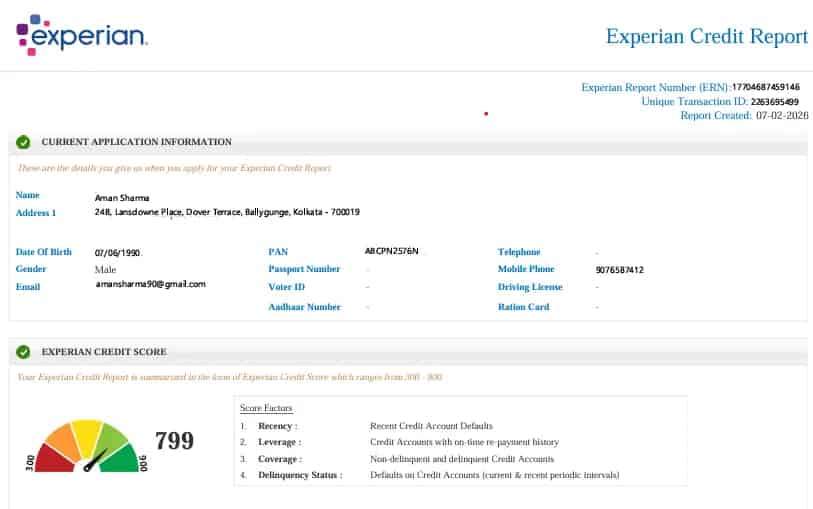
None of this affects your score directly, but it matters a lot for verification, banks lean on this section to confirm the credit history genuinely belongs to you.
If you spot spelling mistakes, an outdated address, or wrong personal details here, get them corrected. They won't drag your score down, but they can absolutely cause confusion during loan processing or KYC checks.
Experian Credit Score: The Summary Number
Your Experian score sits somewhere between 300 and 900. Higher generally means lower risk in the eyes of a lender.
A score in the 780 to 800 range, for instance, usually reflects solid repayment habits and responsible credit use.
But treat the score as a summary, not the full story. No bank approves a loan purely because the number looks good, they'll always dig into the report itself to understand what's actually behind that number.
Score Factors: Why Experian Feels More Detailed
Experian breaks its score down using a handful of internal factors, which is a big part of why the report feels denser than CIBIL's. In practice, this mostly comes down to how recently you've missed or delayed a payment, how much of your available credit you're actually using, the mix of healthy accounts versus problematic ones, and any current or recent defaults on record.
You don't need to memorise the exact terminology here. The underlying idea is simple, Experian is essentially telling lenders whether your credit behaviour looks stable, stretched thin, or genuinely risky.
Report Summary: The Quick Overview Lenders Check First
Before diving into individual loans, most lenders glance at the report summary first for a high-level snapshot of your credit profile: your total number of credit accounts, how many are active versus closed, your total outstanding balance, your secured versus unsecured exposure, and the number of recent credit enquiries.
Banks use this section to form a quick impression of your overall credit health. Too many active accounts, heavy unsecured exposure, or a burst of recent enquiries can raise a flag even before they look any deeper.
Credit Account Summary: Your Full Loan History
Here you'll find every loan and credit account ever reported to Experian, active and closed alike.
Each entry shows the lender's name, account type, ownership, key dates, sanctioned amount, current balance, overdue amount, and account status.
This is essentially where banks look for patterns, whether loans are being closed the proper way, whether balances are staying under control, and whether any single account stands out as risky compared to the rest.
Closed accounts sitting at zero balance are a genuinely good sign. Anything showing an overdue amount or an unusual status is where attention gets drawn.
Credit Account Information Details: One Account at a Time
When a bank wants more clarity on a specific account, this is the detailed view they open up.
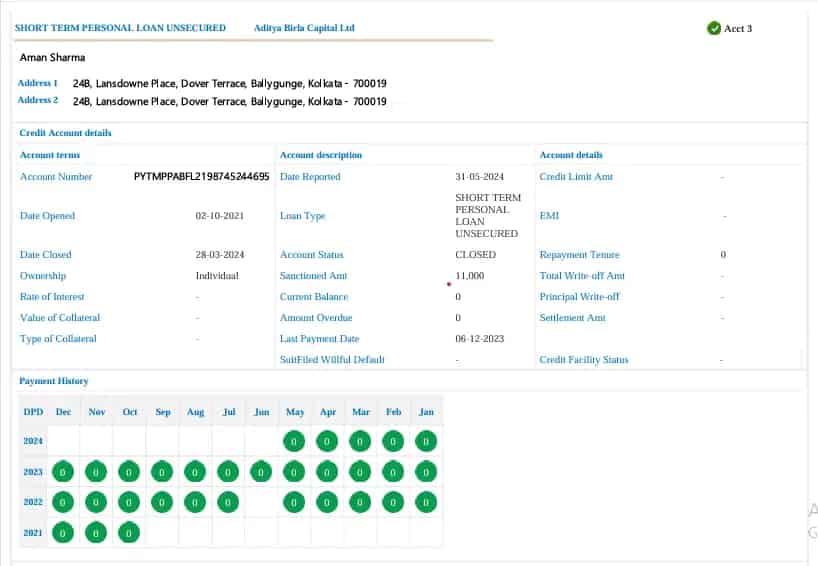
You'll see things like:
- Date opened and closed
- Repayment tenure
- Last payment date
- Interest rate, where reported
- Collateral details for secured loans
- Any write-off or settlement amounts
This is exactly where Experian goes noticeably deeper than CIBIL. It can look dense at first glance, but it's genuinely what helps lenders verify timelines and check for consistency in your repayment behaviour.
Credit Facility Status: Where You Actually Need to Pay Attention
In a healthy report, this field is usually just blank or shows a dash, meaning there's no adverse classification against that account.
But if it shows something like:
- Settled
- Written-off
- Post (WO) Settled
- Suit Filed
...that means the loan didn't close the normal way.
For unsecured loans in particular, these remarks are serious red flags, and they can affect your approvals for years afterward, even long after the loan itself has technically closed.
Credit Enquiries: What They Reveal About Your Borrowing Pattern
This section lists every credit enquiry made against your profile, along with the date and the reason behind it.
The odd enquiry here and there is completely normal. But a cluster of enquiries within a short window can suggest credit hunger or financial stress to a lender, even if you never actually went ahead and took the loan.
Is Experian Genuinely Harder to Read Than CIBIL?
Not really.
If you're already comfortable reading a CIBIL report, Experian won't feel unfamiliar. The core sections line up: personal details, credit accounts, payment history, enquiries. Experian just layers in more internal indicators and account-level detail on top of the same basic skeleton.
Once you know what to actually focus on, it gets easier to read, not harder. And lenders, for their part, tend to favour borrowers who apply selectively rather than chasing credit from everywhere at once.
Final Thoughts: Read It Once, Use It With Confidence
Your Experian report isn't designed to intimidate you, it's simply a detailed record of how you've handled credit over time. Keep your focus on the accuracy of your personal details, clean and properly closed accounts, consistent on-time payments, and making sure no serious status flag is sitting anywhere in the report.
Once this report actually makes sense to you, you stop guessing why a bank responded the way it did. You get real clarity and real control, and that's worth a lot more than any single score.